Independent intelligence for curious builders
AI · Code · The web
From a hand-picked set of X and YouTube sources

The Morning Gazette

A little more signal for your morning coffee.

Issue No. 58 · Sunday, 22 November 2026 21 Nov 09:00 → 22 Nov 09:00 · Bucharest
The front page / Open source · Nov 21–22

OpenCode adds a native client—not a new agent engine.

A Rust CLI and TUI landed in the development tree. The existing TypeScript server remains on the other end of the connection.
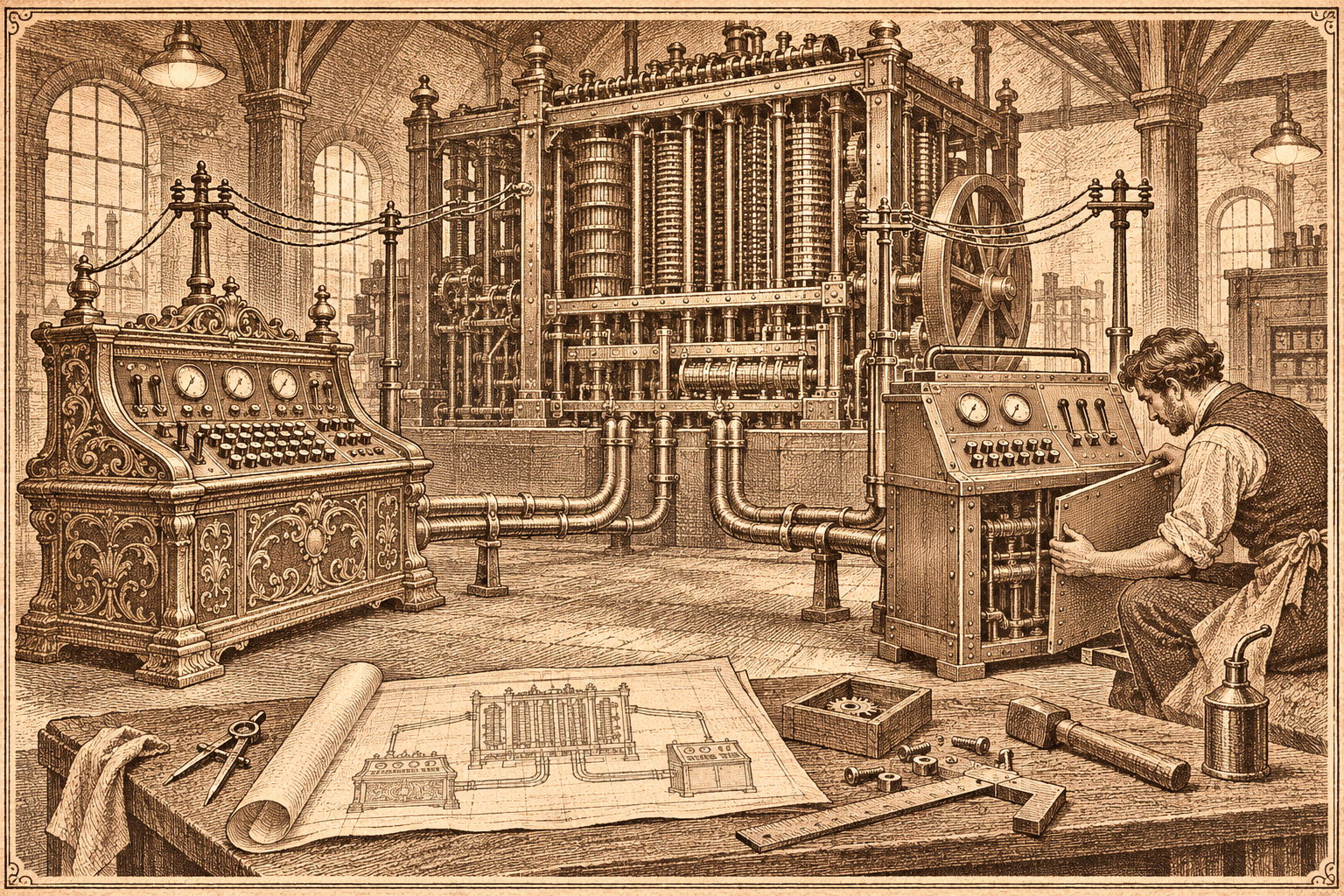
Sepia workshop where two different operator consoles connect to the same analytical engine.
AI-generated editorial illustration · A new console for the same engine.

OpenCode’s native-client pull request merged on November 21 at 23:07 UTC—01:07 on November 22 in Bucharest. It adds packages/cli-rs, a Rust CLI/TUI built on OpenTUI’s Rust crates. The README at that commit is unambiguous: the binary is opencode-native, it is a client of the TypeScript server over HTTP, and it does not ship yet.

The documented design shares sessions, the background service and cli.json with the TypeScript client. It runs TypeScript TUI plugins in a separate Bun process and also supports Luau plugins. This is not evidence that OpenCode’s agent runtime has been rewritten in Rust.

That boundary is the interesting part. A different interface can be developed while the server continues to own the work. In principle, it lets a team change rendering and interaction without asking users to move their sessions into a second agent system. That is an architectural opportunity, not a measured performance result.

The questions for a preview are practical: does the same session resume correctly, do plugins behave as expected, and can a reconnect preserve the state a user cares about? A fast renderer is only part of the experience; drafts, approvals and reading position matter too.

The published release list checked for this edition still topped out at v2.3.2 from November 18. Treat the native client as development work, not an update you already received through the normal installer. No native build or comparative benchmark was run for this article.

Runtime internals / Nov 22

Bun merges a narrower ICU implementation in Rust.

Bun PR 49369 merged at 05:36 UTC. It replaces the ICU4C code used by Bun on Linux, Windows, FreeBSD and Android with a Rust implementation of the functions its callers need. ICU headers and data remain; macOS keeps system ICU. The authors report tests and performance measurements, but also document intentional behavioral differences. This is development-branch work, not a claim that Bun 1.4.5 contains it.

Agent interfaces / Nov 21

Codex gets structural Markdown selection in source.

A Codex commit adds block selection in the transcript: m marks a block, h/l move between siblings, j/k extend the selection, and Tab expands to a containing block or section. Copying with y retains Markdown structure. The change landed at 21:51 UTC; inclusion in a public release was not verified.

Protocol work / Nov 22

OpenCode follows the MCP Events beta.

PR 65271 merged at 03:48 UTC, updating experimental push delivery for the negotiated 2026-07-28 protocol and servers that advertise the extension. Its notes cover validation, heartbeats, reconnect backoff and replay deduplication. Polling and webhooks remain out of scope. A server must offer the capability; this does not turn every MCP tool into an event stream.

Today in computer history · November 22

The computer-animated feature gets its audience.

1995 · November 22

Toy Story opens.

Disney dates Toy Story’s theatrical opening to November 22, 1995. It was the first fully computer-animated feature film—a milestone that put computer graphics in the service of characters and a full-length story.

Disney’s historical account
Before the feature

The shorts did the groundwork.

Pixar’s earlier shorts, including Luxo Jr. and Tin Toy, explored how simple digital forms could convey personality. The technical achievement mattered, but the audience still needed a reason to care about the characters.

The path to Toy Story
The people behind the signal

Our sources

The archive

Every edition has its day.