ThePrimeagen is joining Omarchy Core to lead Agentic QA: a plan to let automated agents exercise the Linux desktop before each release.
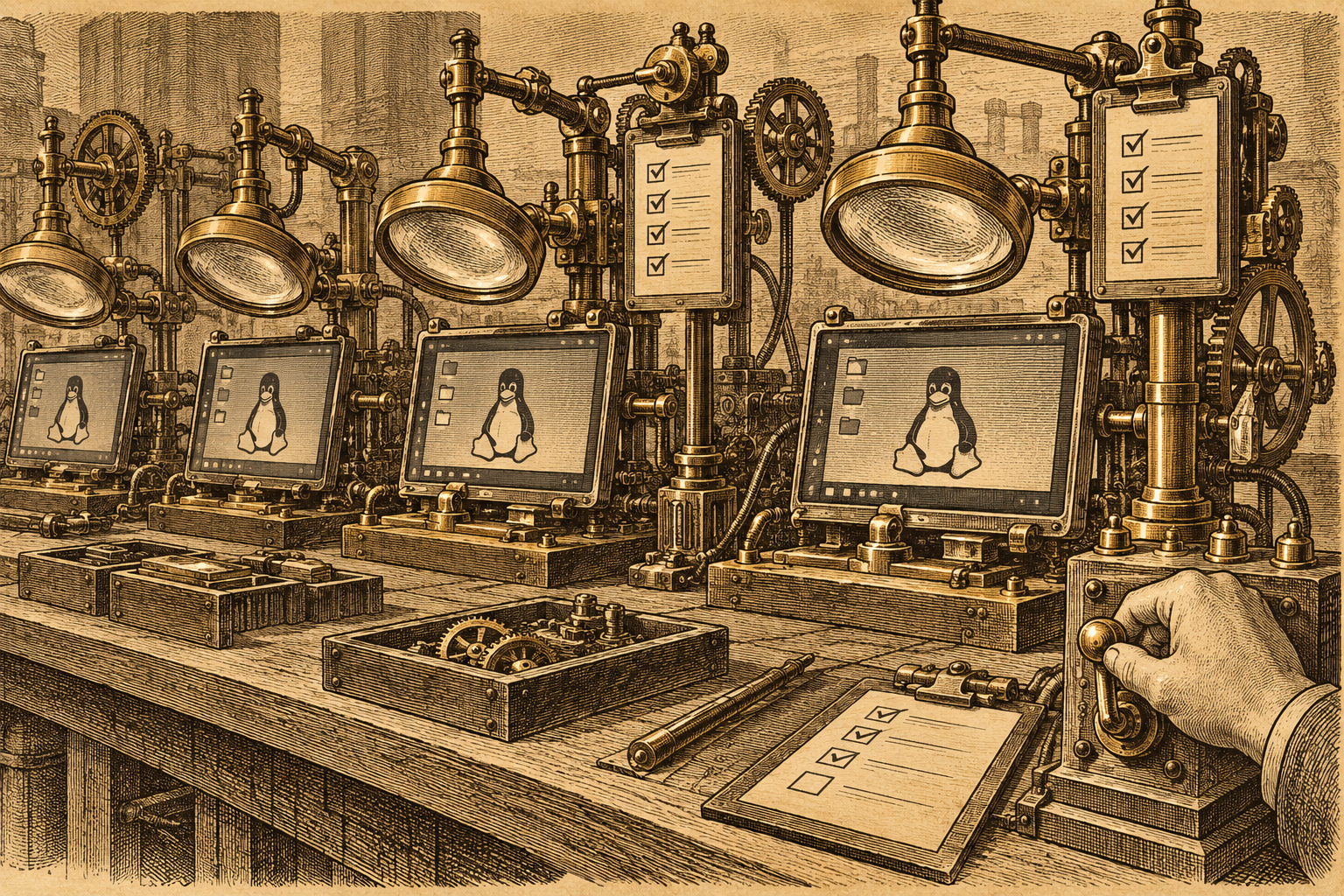
AI-generated editorial illustration · Desktop releases under inspection.
In Omarchy’s September 26 announcement, DHH describes Prime’s Oligarchy harness: it boots Omarchy in QEMU virtual machines, sends keyboard and mouse input, captures screenshots, and records whether the expected behavior occurred. Each test starts from a fresh disk image, with automation workers taking tests from a queue.
The target is practical release coverage across installers, updates, keybindings, menus, themes, plugins, and hardware variants. Prime says he will publish more detail on milestones and expectations this week. The announcement describes a harness being developed and a future QA process; it does not yet prove that every Omarchy release has passed a full agent-driven test suite.
OpenCode says LongCat-2.5-Preview is free through its service for two weeks. Its post advertises a one-million-token context window, multimodal input, and zero data retention. Those are the provider’s stated terms; check the model picker and service details before relying on them for sensitive work.
Matt Pocock argues that a CODING_STANDARDS.md file should grow from meaningful errors an agent makes, rather than begin as a long speculative rulebook. He also shared an experiment using AI-generated stills and speech to preview course videos before filming. Both are workflow ideas he is trying, rather than measured claims that either method improves outcomes.
ttfx 0.4 trades Rust for assembly in its fast path
DHH says the assembly-accelerated version of ttfx, a terminal print effect used by Omarchy, has reached version 0.4. He reports more than 1,000× the speed of the original Python implementation and 32× the previous Rust version in his comparison. These are project-reported benchmarks, dependent on workload and hardware; he says the Rust fallback will be improved too.
Google’s Antigravity account introduced a dedicated /plan mode; within this edition’s window, Gergely Orosz questioned how distinctive the workflow is and compared it with earlier structured planning tools. His post is an opinion about the product’s direction, not a test of the new feature.
On September 27, 1983, Richard Stallman posted the initial announcement of GNU, a plan for a freely shareable Unix-compatible operating system. The Free Software Foundation notes that work on the project formally began in January 1984.
Google’s fourth-birthday Doodle appeared on September 27, 2002. The amusing wrinkle: Google’s own Doodle archive says its first Doodle appeared in 1998 before the company was incorporated, as an “out of office” note from its founders.