Issue No. 51 · Sunday, 15 November 202614 Nov 09:00 → 15 Nov 09:00 · Bucharest
The front page / Developer workspace · Nov 14
T3 Code’s customizable interface is nightly-only.
A follow-up from Theo clarifies what stable users can expect from the prompt-driven interface shown in yesterday’s edition.
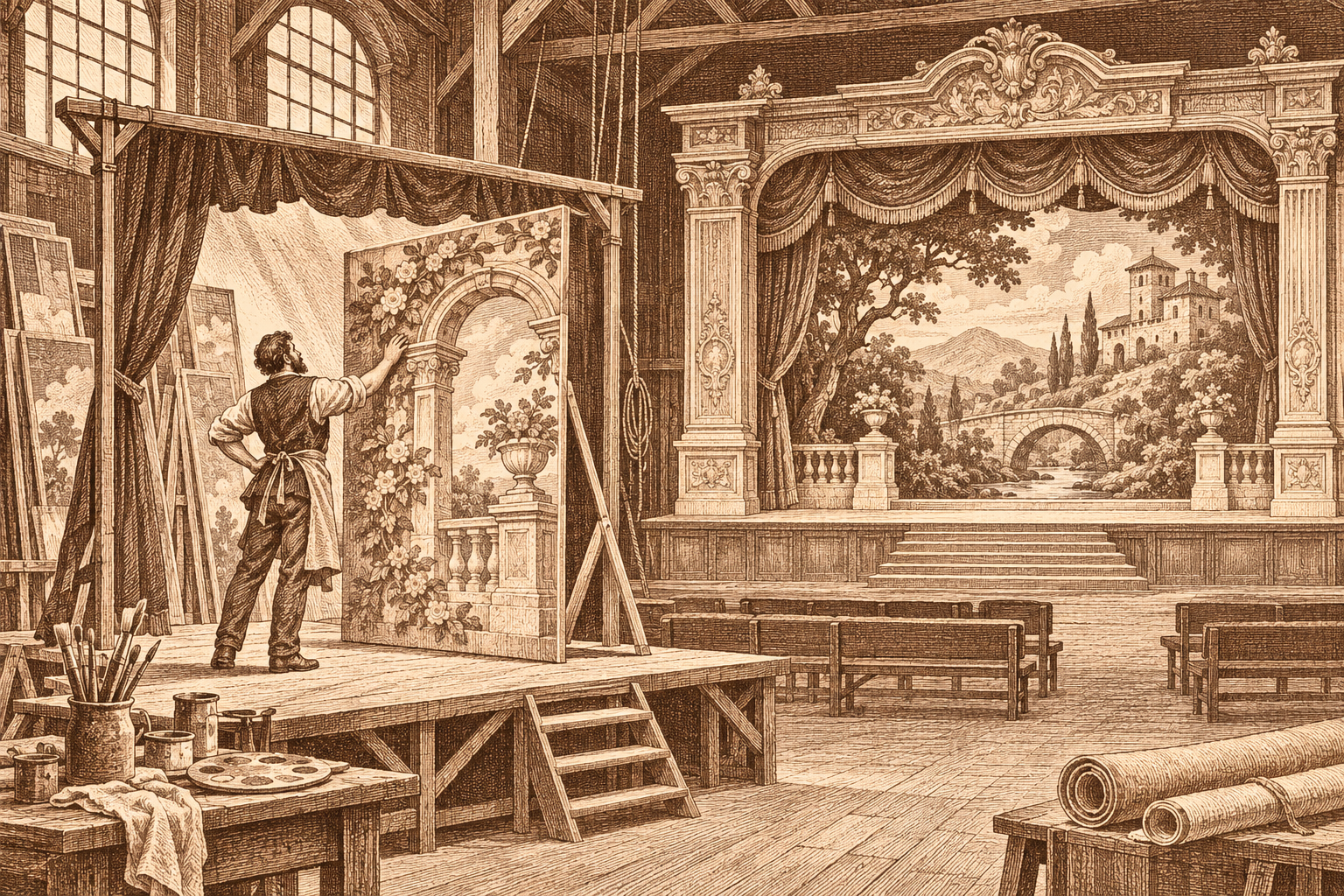
AI-generated editorial illustration · The rehearsal stage is not the main stage.
At 23:06 Bucharest on November 14, Theo clarified ↗ that T3 Code’s in-app UI customization was available only in the nightly build. He described a friend on stable who asked an agent to customize her installation and ended up with a fork after the agent cloned the source. That is one reported outcome, not evidence that stable installs automatically fork or update.
These are two different kinds of customization. Changing an interface through a feature the app provides uses the installed build’s capabilities. Changing its source can leave you maintaining your own build. The second might be worthwhile, but it should be a deliberate decision: who applies upstream updates, and where do your changes live?
The useful instruction for an agent is quite narrow: check the installed channel, see whether it exposes the feature, and tell me what’s missing before changing source or switching builds. We did not install either channel or reproduce the fork.
November 14 clarification · Nightly is not stable · Maintainer anecdote, not a test.
Agent tooling / Nov 14
Anomaly experiments with agents that receive events.
Dax described an unreleased feature ↗ in the team’s console that lets agents receive events from Slack or GitHub. He says some teammates directed their agents to reply to Slack messages. That is internal experimentation, not a public launch.
Receiving an event and speaking for someone are different permissions. Even a useful prototype needs to make it clear which messages are automated, who can authorize replies, and when a draft should wait for review.
The showcase follows Issue 49’s beta coverage. It does not establish that the controls are interchangeable in practice: validation, keyboard access, and error feedback still need checking.
Preview deployments / Nov 14
Jared Palmer suggests a second job for Devin Apps.
Palmer pointed to shareable private preview URLs ↗ as a use case beyond internal sites. It’s a proposed workflow, not a new release announcement or a guarantee about preview isolation. Before showing a work-in-progress to others, verify who can open it and what data it can reach.
Software craft / Nov 14
Judge the polish after the demo.
Mitchell Hashimoto described Superlogical’s focus ↗ on carefully crafted software, while noting that the team uses AI. That is a statement of priorities, not a product announcement. A practical test of craft is how the app handles the mundane parts: a canceled action, a lost connection, or reopening yesterday’s work.
Today in computer history · November 15
A calculator project puts a processor in the paper.
1971 · Electronic News
The Intel 4004 is advertised.
On November 15, 1971, an advertisement for the Intel 4004 appeared in Electronic News. The Computer History Museum identifies it as the first microprocessor advertisement.
The museum traces the four-bit chip to a custom circuit project for Busicom, a Japanese calculator maker, and credits Federico Faggin, Ted Hoff, Stan Mazor, and Masatoshi Shima with its design.