Issue No. 22 · Saturday, 17 October 202616 Oct 09:00 → 17 Oct 09:00 · Bucharest
The front page / Developer tooling
Same registry. A different schema contract.
shadcn’s October 16 release moves its exported registry schemas to Zod 4. The interface may look familiar, but code that feeds those schemas into Zod 3 can stop typechecking—a small dependency update with a very real boundary.
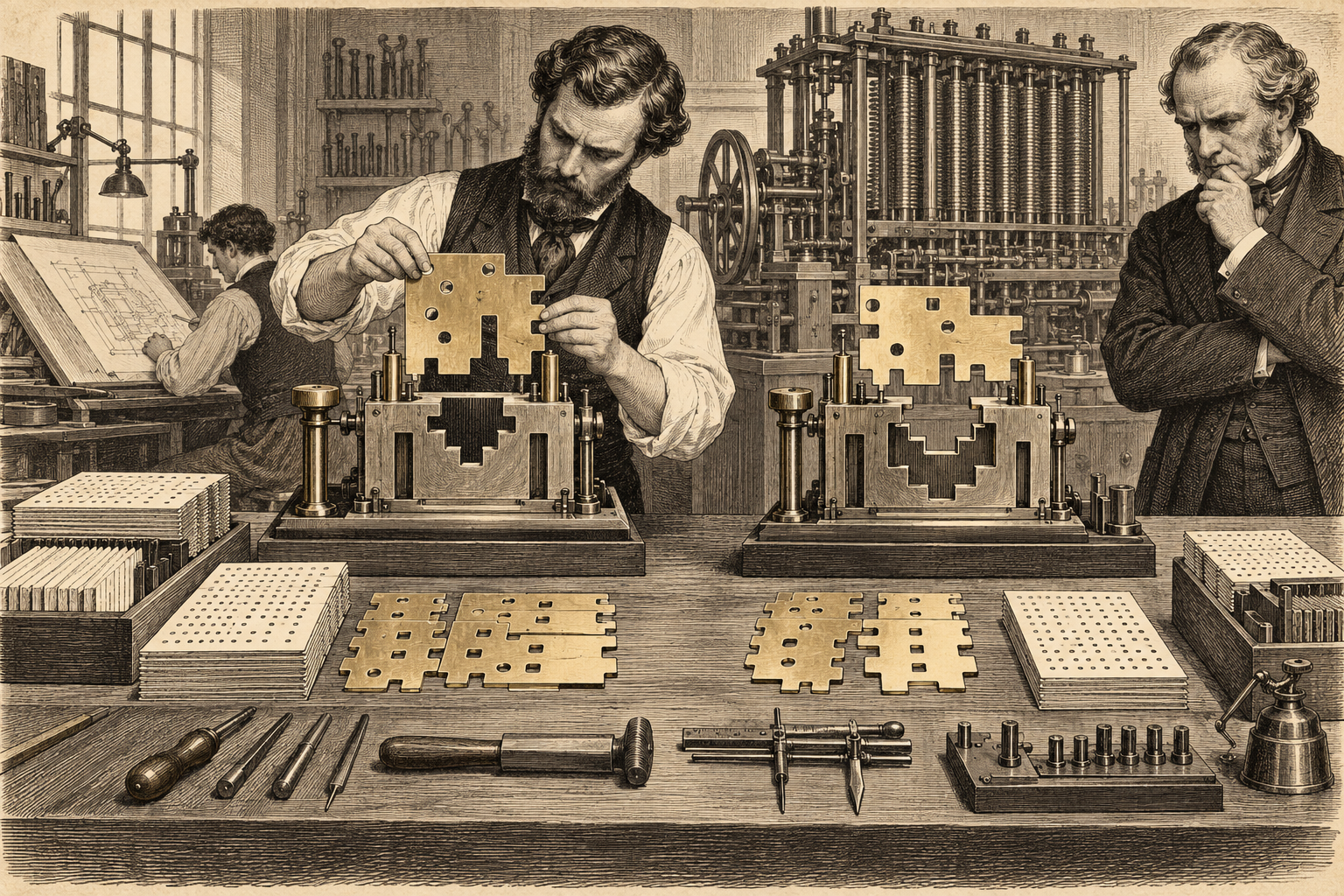
AI-generated editorial illustration · Nearly identical parts still need a compatible contract at the point where they meet.
The published packages are shadcn@4.22.0 and @shadcn/registry@0.2.0. GitHub dates the releases to October 16 at 13:24 UTC, inside this edition’s window. The underlying migration pull request merged on October 14; today’s news is the packaged release, rather than a newly written migration.
The practical change sits in shadcn/schema and @shadcn/registry/schema, which now export Zod 4 schemas. For consumers still using Zod 3, the release notes recommend the exported RegistryItem, RegistryItemFile, and Config types instead of using that older version’s z.infer. For schema composition, use the schema’s own methods, such as registryItemSchema.array(), rather than passing it into Zod 3’s z.array.
There is a second, quieter compatibility surface: error handling. Zod errors expose issues, rather than errors, and validation messages now follow Zod 4’s wording. Consumers that inspect errors or snapshot exact messages should pay attention alongside code that imports the types.
The Gazette’s reading: a library’s public contract includes the runtime objects it exports, not just the TypeScript names attached to them. Two schemas can describe the same data while belonging to different composition systems. For registry authors and tool builders, that makes import boundaries worth checking explicitly instead of assuming that a familiar shape guarantees interchangeability.
@shadcn/helpers@0.3.0, published October 16, adds { preliminary: true } to a tool handle’s output() so it can stream preliminary output. The implementation was part of the earlier Trace, Code Block, and AI Elements work; the package release makes that capability available separately. The useful distinction is between a partial observation and a completed result—interfaces should preserve it rather than making early output look final.
Reasoning variants move from catalog to configuration
OpenCode 1.19.3 now generates reasoning variants from configured model reasoning options, replacing catalog variants while preserving the user’s configured overrides. The October 16 release note is narrow: it changes where those variants come from. It does not announce a new model or claim a quality improvement. For users with customized model settings, the promise worth noticing is that their overrides survive the change.
In an October 16 OpenAI customer case study, Stack Overflow says its ChatGPT plugin tripled registrations overnight and helped lift agent creation by up to tenfold. It also reports that two engineers built Stack Overflow for Agents in a few weeks with Codex, and that one connector took four days instead of the usual three to six weeks. These are company-reported outcomes in a vendor case study, not an independent causal evaluation. The defensible product lesson is simpler: reducing setup steps can matter as much as improving what sits behind them.
On October 17, 1994, IBM announced that it would cut its personal-computer range from nine models to four lines. The consolidation also revived the IBM PC brand name—a familiar label returning as the company tried to make its product family easier to understand.
The four planned divisions were IBM PC for commercial desktops, IBM PC Server for networked machines, ThinkPad for portables, and Aptiva for home users. A little product-positioning history: the company that helped define the PC was still working out how best to label its own computers.
Developer educator and product builder sharing practical notes on React, Next.js, AI tooling, and the evolving craft of shipping for the web.
Randomly selected from our 28-source reading list. The actual profile picture previously verified for Issue 4 is reused because direct X access was unavailable. This selection stays fixed in the archive.
 ↗