Issue No. 15 · Saturday, 10 October 20269 Oct 09:00 → 10 Oct 09:00 · Bucharest
The front page / JavaScript infrastructure
Deno joins Cloudflare—and changes course
Ryan Dahl and the Deno team are joining Cloudflare to combine celld with workerd. The ambition is a self-hostable, distributed Workers platform; the price is an orderly sunset for Deno’s runtime and hosting service.
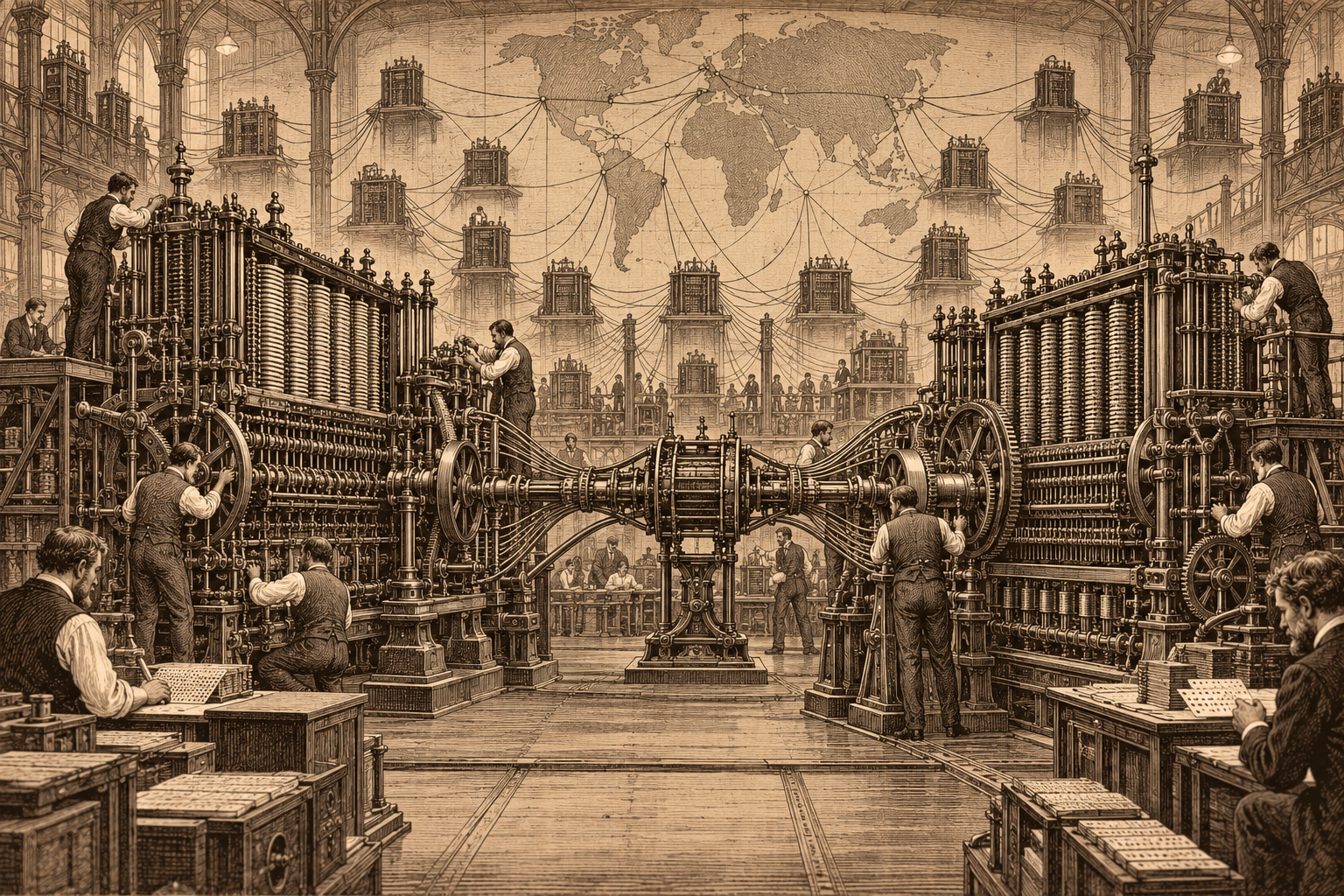
AI-generated editorial illustration · Two engines meet; a distributed machine takes shape.
Cloudflare’s October 9 announcement says the full Deno team is joining to make self-hosted Workers and Durable Objects a first-class way to run distributed applications. The plan is to merge the code and ideas of Deno’s celld project into Cloudflare’s open-source workerd runtime, with Ryan Dahl and Bert Belder leading the effort.
The destination is clear: one programming model for compute, state, queues, WebSockets, and relational data that can run on Cloudflare’s network or on infrastructure a developer controls. workerd already powers Workers, but its self-hosted Durable Objects implementation is single-instance. celld was designed to add routing and storage across machines while depending only on object storage.
The transition is unusually explicit. Deno says its runtime will receive monthly bug-fix and security releases for one more year, then Deno’s own development will end while the code remains open source. Deno Deploy will operate for six months before closing; paying customers will get migration help. JSR continues, its infrastructure moves to Cloudflare, and rusty_v8 support continues with integration into workerd under consideration.
This is both consolidation and a bet: the team that tried to reinvent the JavaScript runtime now argues that the harder abstraction lives above the runtime, where distributed state and deployment meet. For Deno users, the dates matter immediately. For the wider ecosystem, the more consequential question is whether a Cloudflare-developed Workers model can become a credible open, self-hosted server platform.
Sunil Pai says hosted *.partykit.dev projects and npx partykit deploy will shut down on October 23. New projects stopped October 9; deploys and data export close October 16. Existing projects are meant to move to PartyServer in the developer’s own Cloudflare account. Workers already deployed there keep running, but their next deploy must use Wrangler. PartyServer, partysocket, y-partyserver, and the community Discord remain.
Basecamp now offers a hosted MCP server for ChatGPT, Claude, Cursor, Grok, and other compatible clients. The connector can search projects, summarize discussions, manage to-dos and cards, read or write docs, post messages, and more. Its permissions mirror the signed-in person’s access, with a choice between read-only and full access. The endpoint is public documentation—not a promise that every client exposes every action equally.
Cognition says Devin users can link a ChatGPT Go, Plus, or Pro account and have GPT-model usage count against that account’s ChatGPT quota instead of Devin’s quota. It is an unusual bridge between consumer subscription capacity and a third-party coding agent. The announcement does not make the plans interchangeable: Devin remains its own product, and the linked use is bounded by the user’s OpenAI allowance.
OpenAI’s ChatGPT account says a dot can now be created on iOS and Android, then delegated Codex work from existing ChatGPT conversations, Codex threads, and automations. A separate OpenAI Developers post introduced composer predictions in Codex for Pro users: suggested next messages based on the current conversation and the user’s style. These are workflow conveniences, but together they push Codex toward an assistant that can carry context across interfaces instead of waiting for a blank prompt.
On October 10, 1995, MIT’s Media Laboratory published A Day in the Life of Cyberspace. The project invited people to submit accounts in the days leading up to October 10, then collected and edited the contributions into a snapshot of the early public web.
The submissions were organized around privacy, expression, age, wealth, faith, the body, place, language, and the environment. That editorial choice feels prescient: even in 1995, a useful portrait of the Internet was not merely a catalog of protocols and machines, but a record of how a new medium was already changing people and institutions.
 ↗