Issue No. 33 · Wednesday, 28 October 202627 Oct 09:00 → 28 Oct 09:00 · Bucharest
The front page / Terminal infrastructure
The terminal grows up—and travels.
Ghostty 1.4 brings richer graphics and leaner scrollback to the standalone terminal. Meanwhile, JetBrains is putting the same emulation engine inside its IDEs. The shell window is becoming shared infrastructure.
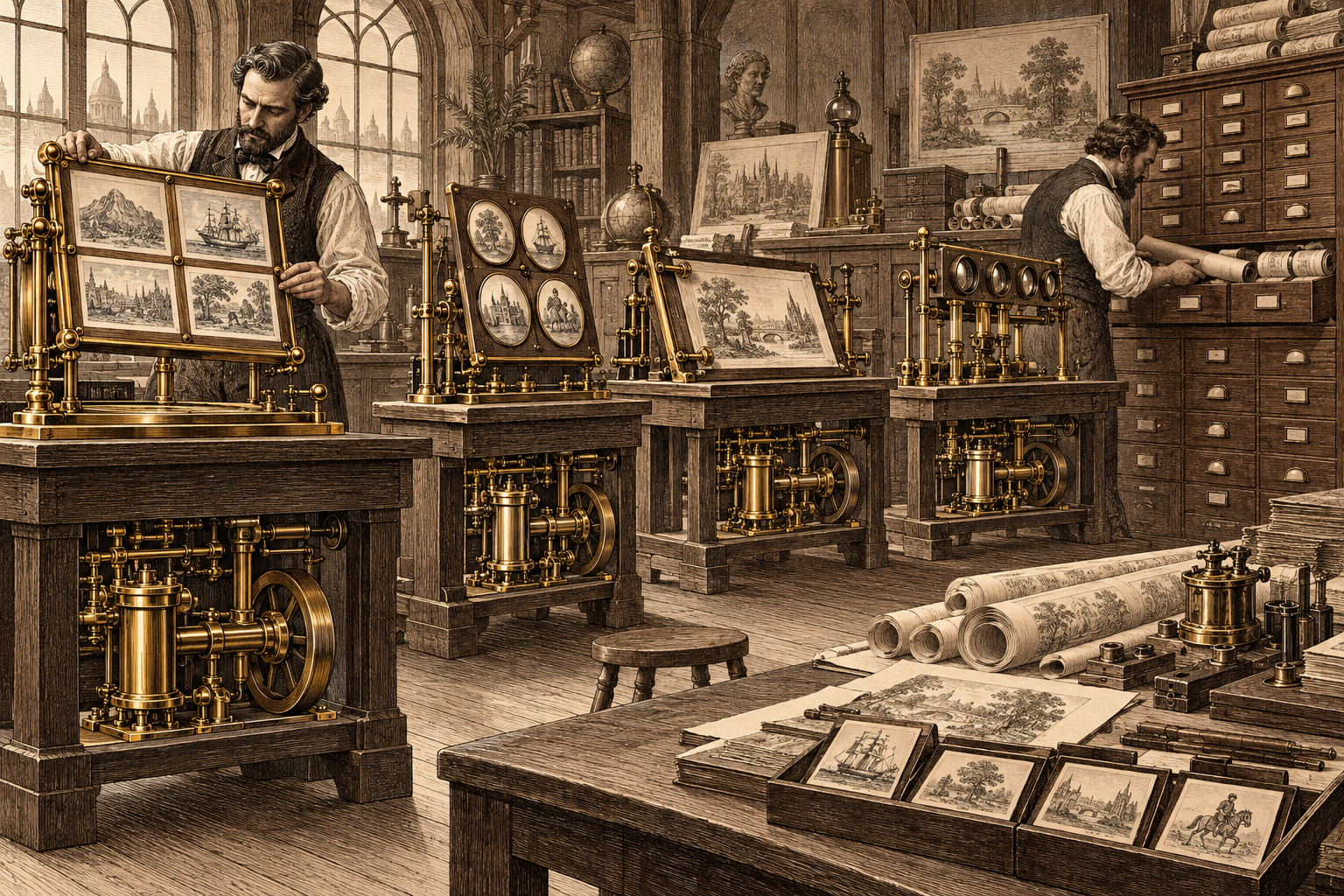
AI-generated editorial illustration · Different workbenches, a shared engine underneath.
Released October 27, Ghostty 1.4.0 completes its Kitty graphics implementation with animation and relative image placements. The maintainers describe it as the first implementation outside Kitty to cover the published specification in full. That is the project’s conformance claim, not an independent Gazette certification.
The release also compresses off-screen scrollback while idle on macOS and 64-bit Linux. Ghostty reports 70–90% lower physical memory use for typical text-heavy compressed history; it raises the default scrollback limit from 10 MB to 50 MB. This concerns resident memory for those pages, not a 90% reduction in the whole application. Pages decompress when searched or brought back into view.
Security is part of the release, not a footnote. One advisory fixes carriage returns bypassing paste confirmation in versions through 1.3.1. It requires a malicious copy-paste and affects programs without bracketed-paste mode; interactive Bash, Zsh, and Fish enable that mode by default and are not affected by this particular path. The advisory identifies 1.4.0 as patched.
A separate advisory fixes crafted directory names passing escape sequences through shell integration, including possible clipboard replacement. Entering an untrusted directory can trigger it; Zsh and Bash have different exposure. Its patched version is also 1.4.0. These are specific input-handling failures, not evidence that every normal shell interaction executes arbitrary code.
The larger story sits beneath the window chrome. JetBrains is adopting libghostty for parsing and terminal state while retaining its own rendering and IDE integration. Sharing that core can spread protocol compatibility into places where people never install the Ghostty application at all.
The Gazette’s reading: terminal quality increasingly matters to editors, agents, image viewers, and dashboards—not just the prompt. Reuse lets one implementation improve several hosts, but the host still decides which capabilities actually reach the screen. A parser understanding an image protocol is not the same as an IDE displaying the image.
JetBrains says the libghostty engine is enabled by default in the reworked terminal of 2026.3 EAP builds, with Beta, RC, and stable adoption planned. It replaces JediTerm for emulation, not the entire IDE terminal. Kitty keyboard support distinguishes Enter from Shift+Enter and other modified keys; theme queries and notifications let compatible TUIs follow the IDE’s appearance. But clipboard sequences, notifications, progress bars, Kitty graphics, and styled underlines still need IDE-side implementation even though the library parses them. Do not read the announcement as “every Ghostty feature is now in every JetBrains stable IDE.” The article documents a Registry switch back to JediTerm if the new engine misbehaves.
Omarchy 4.5 RC2 was published October 27 at 23:07 UTC. Its F1 installer unpacks a prebuilt root image and then adds machine-specific packages, instead of installing roughly 940 packages individually. DHH highlights a six-second record on the fastest machines; that is a project-reported best case, not an end-to-end guarantee for your hardware or connection. The release also brings monitor-local workspaces, floating workspaces with a dock, reworked notifications, and an Appearance menu. This is still a release candidate. Its notes explicitly recommend a test machine or a working backup or rollback snapshot before upgrading a system you depend on.
A firewall claim gets a deliberately vulnerable target.
Cloudflare’s October 27 PHP Capture the Flag challenge places a vulnerable PHP installation behind its WAF and invites researchers through its HackerOne program. The useful idea is empirical: test whether the protection holds when the underlying software is intentionally unpatched. Participation is narrowly authorized, not permission to probe arbitrary Cloudflare or PHP systems. The rules limit testing to designated POST endpoints and prohibit denial of service, high-volume scanning, persistence, and social engineering. Sunil Pai joked about the last of those; the published rules explicitly forbid it. Cloudflare also warns that WAF protection does not replace patching the origin. Read the current bounty terms before participating; this edition has not tested or attacked the challenge.
Bill Gates was born October 28, 1955. The Computer History Museum illustrates the anniversary with his original BASIC 1.0 tape and recalls his work with Paul Allen on BASIC for the Altair 8800 while Gates was at Harvard. A language interpreter, not a graphical desktop, was at the beginning of Microsoft’s story.
Microprocessor co-inventor Ted Hoff was born October 28, 1937, in Rochester, New York. The museum notes that summer work at General Railway Signal produced his first two patents before he joined Intel in 1968. He became the company’s first Intel Fellow in 1980.
A source for hands-on programming experiments and the small practical puzzles behind everyday tools. Today’s public notes include an experiment optimizing reMarkable redraws; they do not yet establish a measured performance result.
Randomly selected from our 28-source roster. The actual profile picture was checked on the public X page today. This selection stays fixed in the archive.
 ↗