Independent intelligence for curious builders
AI · Code · The web
From a hand-picked set of X and YouTube sources

The Morning Gazette

A little more signal for your morning coffee.

Issue No. 24 · Monday, 19 October 202618 Oct 09:00 → 19 Oct 09:00 · Bucharest
The front page / Agent interfaces

The fastest work is the work you skip.

T3 Code’s latest nightly turns an ambitious performance push into concrete interface changes. One of the clearest: stop mounting thousands of file-tree rows when only a few dozen are visible.
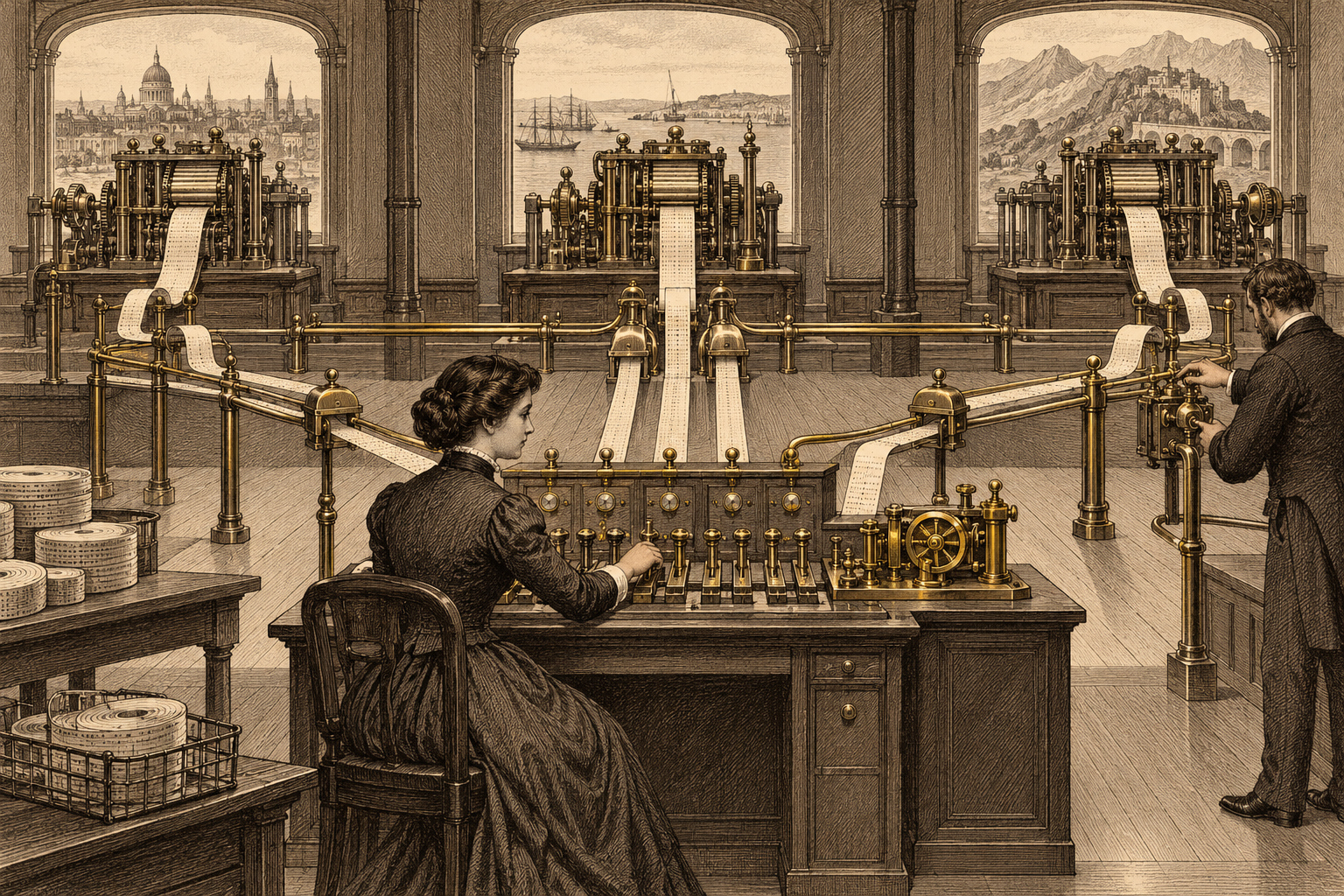
Sepia engraving of operators regulating a telegraph control desk linked to several analytical engines, a metaphor for responsive multi-agent interfaces.
AI-generated editorial illustration · A busy control room need not make every instrument move at once.

The October 19 nightly, 0.1.1-nightly.20261019.3348, was published at 05:36 UTC, inside this edition’s window. Its changes include virtualizing large changed-file trees, removing an HTML-render loading skeleton, and preventing a failed Codex turn from leaving a queue trapped behind its subagents. These are interface and orchestration fixes—not a new model or a stable-release announcement.

The file-tree pull request is unusually concrete. Expanded trees switch to virtualization after 250 files, keeping visible rows and a small overscan window mounted while preserving focus during scrolling. The author reports testing a 16,185-file checkpoint with only 33–44 rows mounted, alongside focused browser tests. That is project-provided verification, not a benchmark independently reproduced by the Gazette. It does, however, explain the mechanism behind the improvement rather than merely promising “faster.”

Theo highlighted the nightly’s responsiveness late on October 18, amplifying Julius Marminge’s report of 86% fewer renders while another thread streams, up to 35% less JavaScript CPU, and an approximately 10% smaller heap. The underlying figures were posted at 05:58 UTC that morning—just before this edition’s window—and are context for Theo’s later post, not newly measured results from today’s build. The exact workloads and comparisons remain the maintainers’ account.

The Gazette’s reading: an agent can keep working on another machine while its interface wastes time locally. Making multi-agent tools pleasant means controlling subscriptions, rendering only relevant state, and keeping navigation responsive while background work continues. Model speed and interface speed are separate budgets. Improving one does not automatically fix the other.

Follow-up / OpenCode recovery

Tibo says affected OpenAI API customers are back in business

At 04:12 UTC on October 19, Tibo said his team had worked with OpenCode to restore users who were also OpenAI API customers and refund credits drawn in the attack. It is a substantive follow-up to yesterday’s Console breach report, but still a first-party account: the post does not supply an independently checked refund total, a completed incident report, or a promise covering other providers. It should not be read as a blanket declaration that every aspect of the incident is resolved.

Oct 19 · Original recovery update ↗
Bun / Preview, not delivery

bun check has another speedup on the way

Jarred Sumner says bun check gets 1.7×–7× faster in the next version of Bun. The wording matters: this is a preview of a future version, not evidence that the currently installed release already has the improvement. The post gives no workload breakdown or reproduction instructions, so the range remains a maintainer claim rather than a universal expectation. It is also a separate announcement from the draft AOT compiler covered yesterday.

Oct 19 · Jarred’s preview ↗
Agent workflow / Small guardrails

A file-size budget with an escape route

Matt Pocock recommends a pre-commit hook that checks only staged files and rejects agent-authored files above an estimated 5,000 tokens, excluding generated output and lockfiles. His proposed estimate is bytes divided by four—not an actual tokenizer count—and the error should explain how to split the file. This is a workflow suggestion, not a new tool release or a universal quality threshold. Its useful detail is the corrective feedback: a guardrail is more helpful when it tells an agent what to do next. Splitting code should still follow coherent responsibilities, not just satisfy a counter.

Oct 18 · Matt’s original prompt ↗
Today in computer history · October 19

Two different kinds of computing milestone

1948 · The practical machine

Build it with technology that already works

On October 19, 1948, the U.S. National Bureau of Standards authorized the Standards Western Automatic Computer, or SWAC. Planned for the Institute for Numerical Analysis in Los Angeles, it aimed to compute using already-developed technology. Its eastern cousin, SEAC, had a different emphasis: testing components and systems for computer standards.

Computer History Museum ↗
1973 · Credit for earlier work

Computing history reaches the courtroom

On October 19, 1973, a long U.S. legal battle over the electronic digital computer ended in John Vincent Atanasoff’s favor. As the Computer History Museum summarizes it, the judge found that his work preceded and contributed to ENIAC’s development. The milestone concerns a particular legal dispute; the broader history of computing still contains many machines and contributors.

Computer History Museum ↗
The people behind the signal

Our sources

The archive

Every edition has its day.