Independent intelligence for curious builders
AI · Code · The web
From a hand-picked set of X and YouTube sources

The Morning Gazette

A little more signal for your morning coffee.

Issue No. 52 · Monday, 16 November 2026 15 Nov 09:00 → 16 Nov 09:00 · Bucharest
The front page / AI and research · Nov 15–16

A candidate Standard Model on a grid.

Physicist Nathaniel Craig describes using GPT‑6 Astra to turn his strategy into a mathematical construction. The new write-up is about the collaboration; the preprint dates to October.
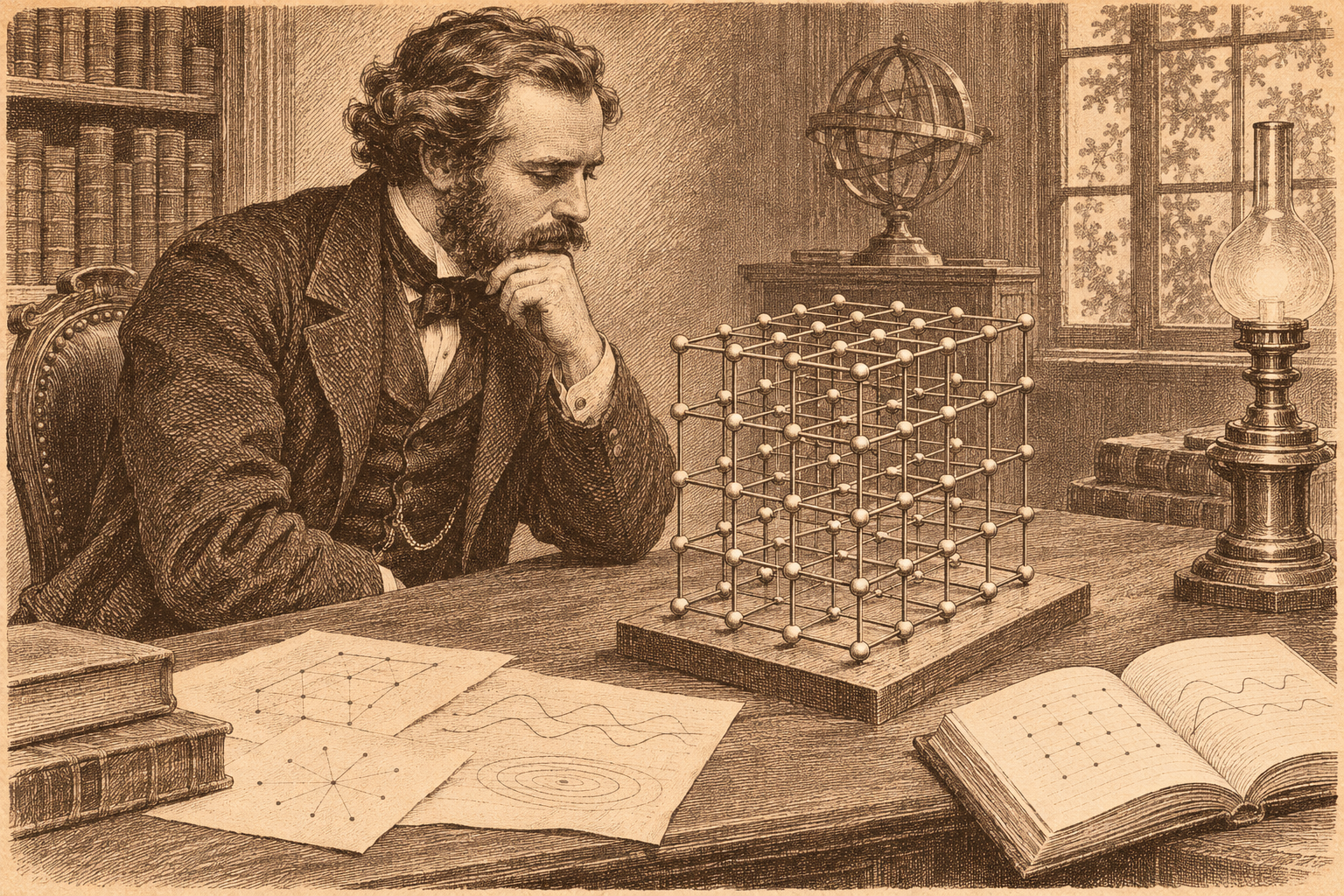
Sepia engraving of a physicist examining a wire lattice at a drafting desk.
AI-generated editorial illustration · A grid is a starting point, not the whole theory.

In the November 15 guest post ↗, Craig recounts developing a candidate definition of the Standard Model on a lattice: a discrete grid representing spacetime. OpenAI shared the post ↗ on November 16 at 02:23 Bucharest. The underlying preprint ↗ was submitted October 6.

The Standard Model already makes remarkably accurate predictions. The mathematical question here is how to define its interactions without relying on a series of small corrections. Craig says he supplied a strategy and Astra helped develop the construction and detailed proof. The preprint’s abstract reports a construction for a class of theories that includes the Standard Model.

Craig calls it a candidate, not a completed definition in continuous spacetime. He also identifies open questions about properties of the finite lattice and the work needed before realistic simulations. This is not a new experimental result or a proof independently checked by the Gazette.

The useful part of the account is the division of labor: the researcher chose a route, the model developed an argument, and the resulting claims can be inspected. A dated preprint and explicit open questions tell readers much more than a headline about AI solving physics.

Developer tools / Nov 16

OpenCode Go adds Qwen4 Max.

OpenCode announced availability ↗ on November 16 at 04:47 Bucharest. The announcement names OpenCode Go; it is not a claim about every OpenCode provider or a model-quality comparison. No inference was run for this edition.

Reliability / Nov 16

Codex team reports progress on capacity errors.

Tibo said the team might have fixed ↗ the “model at capacity” errors at 07:55 Bucharest. His wording was tentative. This is an engineering update, not confirmation that the errors are gone for all users.

Agent tooling / Nov 15

A pipeline still needs controls for its operators.

Sunil Pai described weekend progress ↗ on an agents-as-a-service experiment and called out the need for admin dashboards and hooks. It’s a prototype update. The useful distinction is between getting the workflow to run once and giving people a way to observe and manage it afterward.

Open source / Nov 15

Omarchy’s iPad installer remains a preview.

DHH highlighted a forthcoming installer ↗ while arguing that proofs of concept need productization to reach users. The post is a preview, not a release or compatibility guarantee. We did not verify an installer or test any device.

Today in computer history · November 16

One architecture, more than one machine.

1922 · Flandreau, South Dakota

Gene Amdahl is born.

Gene Amdahl, chief architect of IBM’s System/360, was born on November 16, 1922. He later founded a company that made IBM-compatible mainframes.

Computer History Museum ↗
1964 · System/360

A compatible family.

IBM announced System/360 on April 7, 1964. Its shared architecture meant customers could choose among machines of different sizes without starting over with a different software platform.

IBM’s System/360 history ↗
The people behind the signal

Our sources

The archive

Every edition has its day.